
Barer, pubber og klubber
Fyldt hus, klart hoved: forløbet gør forskellen.
Mellem dørene åbner og lukketid ligger det egentlige arbejde: tjekke fadølsanlægget, fylde is op, starte garderobe og kassesystem, gøre cocktailenes mise en place klar, justere undervejs, når et fad skiftes, isen slipper op, eller køen ved døren hober sig op, og til sidst skylle ølslangerne, slukke lysanlæg og røgmaskine og lukke kassen. Hver vagt overleverer denne tilstand til den næste. Står den som et klart forløb, kører stedet lige så gnidningsfrit ved midnat som klokken otte, uanset hvem der står i baren eller ved døren.
De samme standarder, fra kvartersbodegaen til klubkæden.
Hvert apparat har sine egne opgaver
Fadølsanlæg, køleskabe, glasopvasker, ismaskine, lysanlæg og røgmaskine står ikke som „rengør lokalet" på én liste. Hvert apparat har sine egne opgaver, delt op i åbning og lukning: skrue hanerne af og rengøre dem i skylleopløsningen, skylle ølslangerne igennem, se ismaskinen efter, fylde afspændingsmiddel på glasopvaskeren, fylde væske på røgmaskinen, afprøve lysanlægget.
Stederne navngiver deres apparater med typebetegnelse, ikke med et fællesnavn. Kører en klub med flere barer på én gang, er det med „Fadølsanlæg hovedbar" straks klart, hvilket der menes, og rengøringsvejledningen passer præcis til apparatet i stedet for til en kategori.
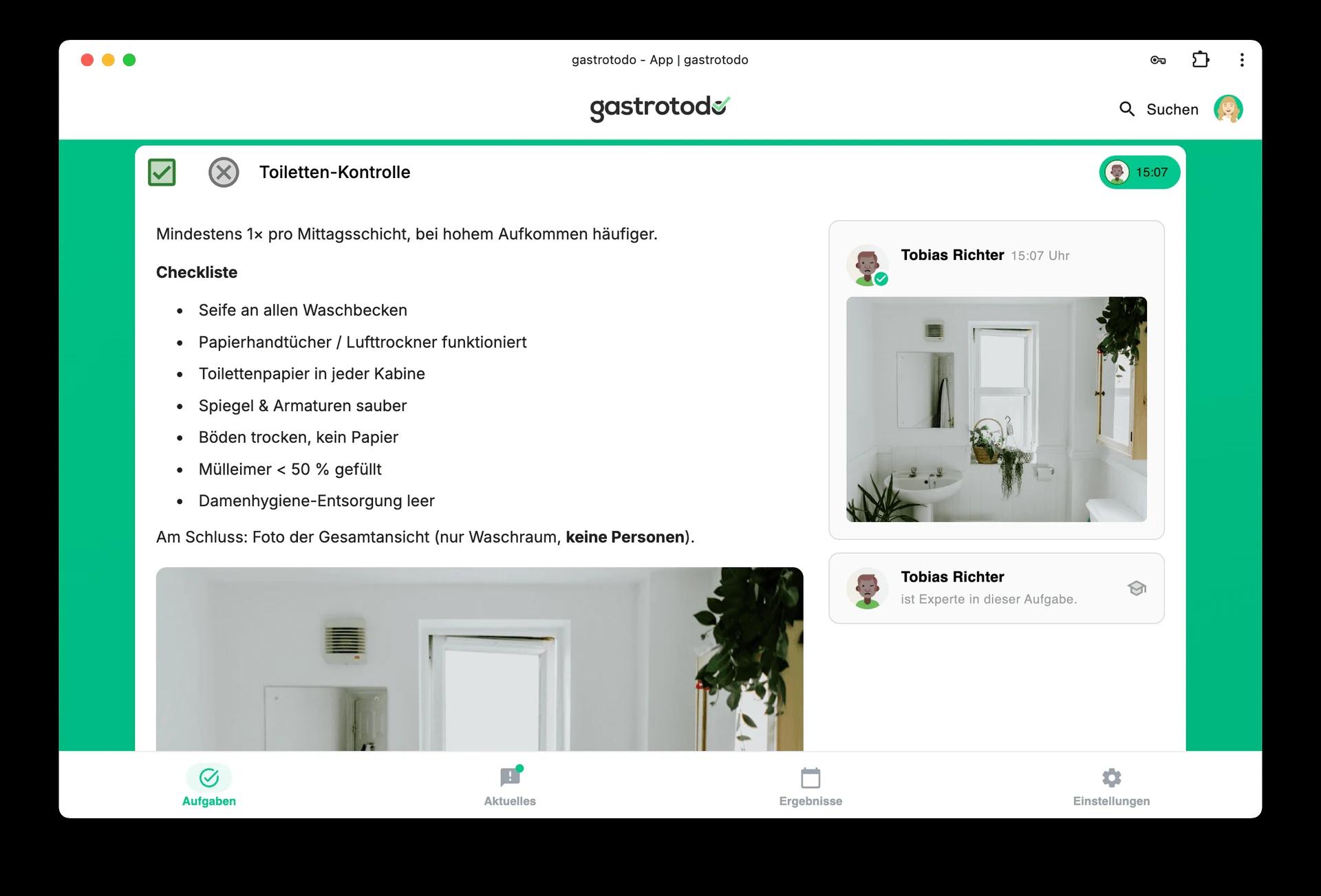
Alle opgaver kan kobles til apparater fra kataloget. Fra det øjeblik de er koblet, stiller systemet automatisk den rette brugsanvisning til rådighed: den hænger på apparatet, og teksten kan søges igennem. AI-assistenten besvarer spørgsmål ud fra den, uden at nogen skal lede efter manualen.

Flere sprog er normalen her
Opgaver oprettes og gøres op på virksomhedens sprog, tysk eller engelsk. Hver medarbejder får dem vist på sit eget sprog: tysk, engelsk, spansk, serbisk, russisk, tyrkisk, fransk eller vietnamesisk. Bartendere, tjenere, runnere, dørmænd og garderobepersonale kommer i denne branche sjældent fra ét land — det er ikke en undtagelse, men hverdag.
Sproget følger medarbejderen, ikke stedet. Den, der helst læser på sit eget sprog, får opgaverne sådan, mens oprettelse og opgørelse for barledelsen bliver på virksomhedens sprog.
Ingen to barer arbejder ens
Næppe to barer beskriver det samme arbejde med de samme ord. Det, der ét sted er baroverleveringen, hedder mellemvagt et andet. Rækkefølgen er alligevel en anden.
For opstarten betyder det: en skabelonliste rammer næsten intet her. Det, der tæller, er et tomt, velskåret miljø, hvor jeres eget forløb hurtigt står — med opgaver, I kan beskrive med jeres egne ord.
Drikkevarekvalitet dokumenteres som hygiejne
Ved siden af rengøringsopgaverne kører kontrolpunkter på selve produktet: kontrollere tryk og skum, smage en cocktail til efter opskriften, tjekke skænkemængden ved målestregen, kontrollere åbningsdatoen på fade og flasker, tjekke holdbarheden på juice og sirupper. Dertil opgaven med om aftenen at sætte isproduktionen til næste dag i gang, så der om morgenen er is nok til alle husets barer.
Dokumentationen er her altså ikke kun myndighedsbestemt. Om værtshus eller klub: der dokumenteres, om gin og tonicen smager som sidst, fordi det er præcis grunden til, at gæsten kommer igen.
„Jeg kan godt lide den enkle betjening og de gennemtænkte processer. Tidligere var jeg ofte ærgerlig over glemte opgaver — med gastrotodo er der ingen undskyldninger længere, fordi hver opgave behandles som en to-do.“

Jens, Ejer · Bunthaus Schankraum
Hvad ejere af barer, pubber og klubber vil vide først
Hos os laver alle alt. Har vi så brug for positioner?
Nej, positioner er ikke et krav. Opdeling efter tidspunkt, rum eller barstation fungerer lige så godt og kan til enhver tid deles finere op, når stedet vokser.
Vi har flere barer eller etager i klubben. Samles det i ét system?
Ja. Hver bar eller etage kan føres som sit eget område med sin egen apparatliste, mens opgørelse og rapportering for hele klubben forbliver samlet centralt.
Hvordan dokumenterer vi rengøringen af fadølsanlægget?
Som en opgave i fast rytme med valgfri underskrift. Den lander med tidsstempel og person i HACCP-dokumentationen — også når en ekstern leverandør rengør ølslangerne.
Hos os skifter løse hjælpere og studerende hele tiden. Kan oplæringen overhovedet betale sig?
Netop dér betaler struktur sig: nye folk finder sig straks til rette ud fra positionslisten, uden at nogen skal bruge ekstra tid på oplæring. Oplæringen kører over de samme opgavelister, der også bruges i hverdagen.
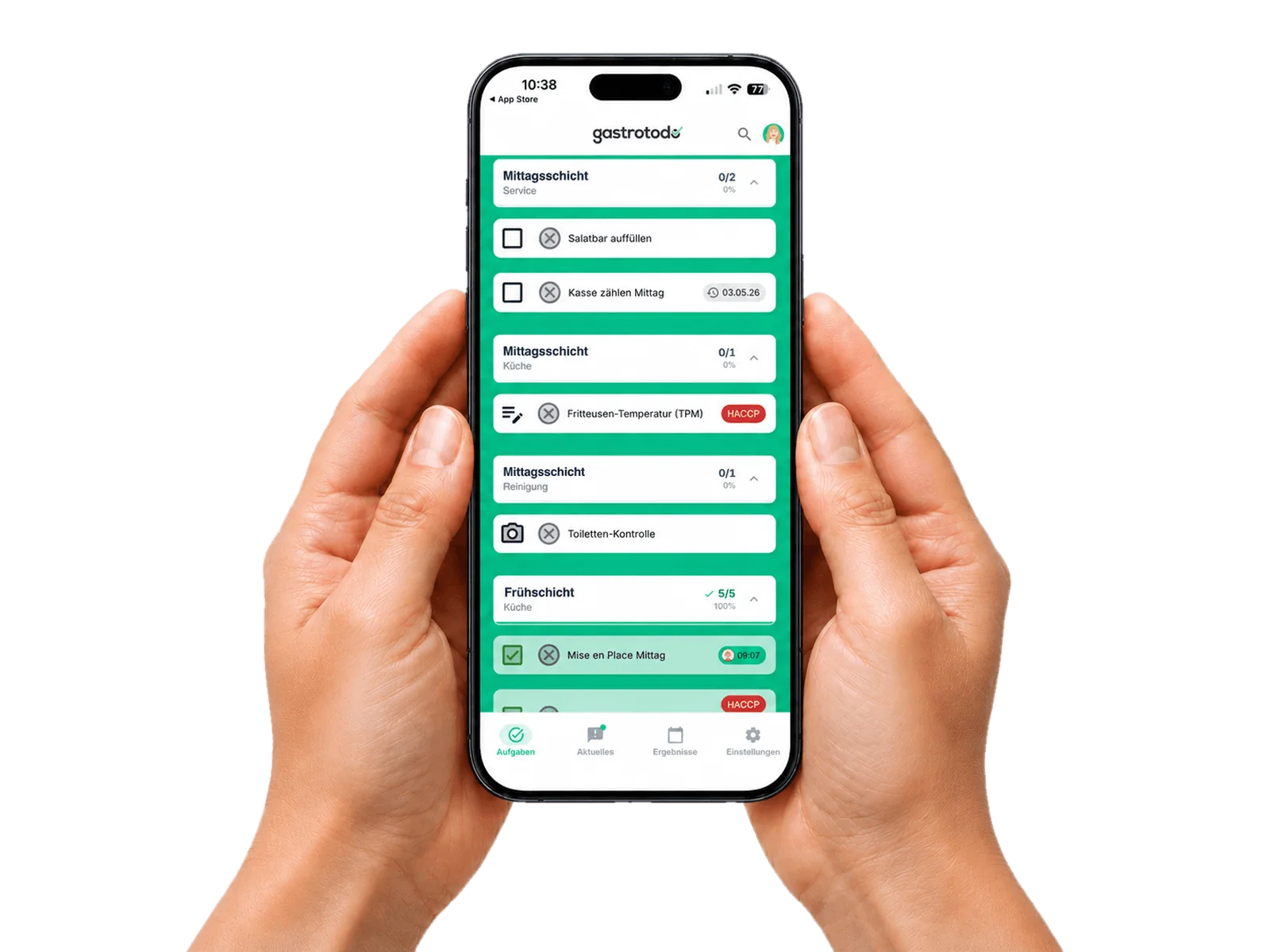
Klar til at strukturere din virksomhed?
Kom i gang med gastrotodo — prøv gratis i 7 dage og fortsæt derefter med den plan, der passer til din forretning.