
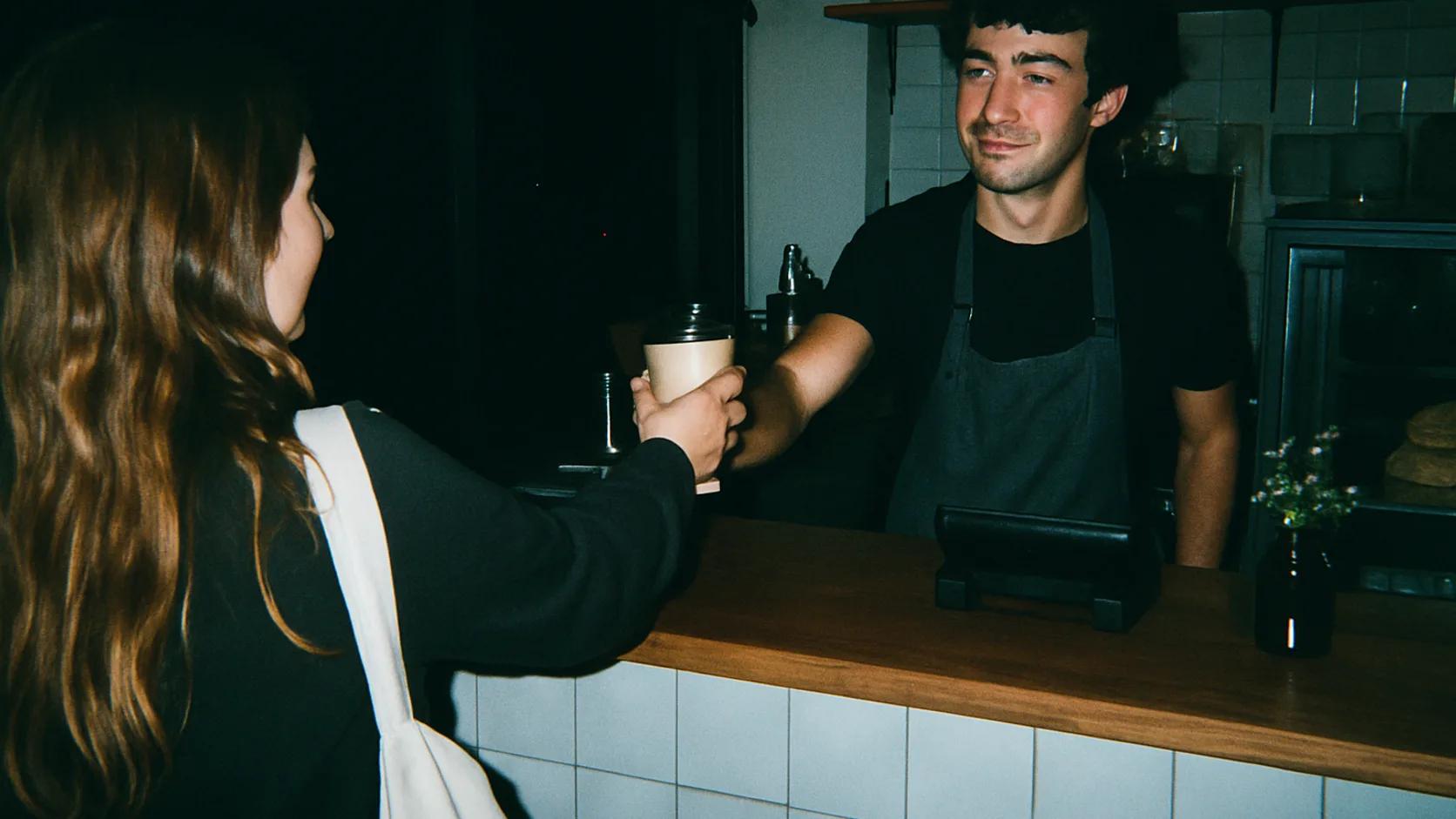
Caféer, kaffebarer og risterier
God kaffekvalitet er et forløb, ikke et tilfælde.
Nogle steder kører morgen- og aftenvagt, andre kun åbning og lukning. Det, der ikke er forskelligt: mellem den første og den sidste kaffe afgør maskinplejen, om espressoen om eftermiddagen stadig smager som om morgenen.
Fra enkeltmandsbutik til kæde — samme katalog, samme pleje.
Hvert apparat har sin egen opgave
Espressomaskine, mælkesystem, filterkaffemaskine, kværne og fuldautomat står ikke som „rengør kaffemaskinen" på én liste. De har hver deres opgave, og det opdelt i opstart og dagsafslutning: gøre maskinen klar til betjening, skylle mælkesystemet, kontrollere malegraden. Om aftenen lukke hvert apparat ned for sig.
Stederne navngiver deres apparater med typebetegnelse, ikke med et fællesnavn. Den, der står ved disken, ved så, hvilken af de to maskiner der menes, og rengøringsvejledningen passer til apparatet i stedet for til en kategori.
Bag det ligger et apparatkatalog, hvor også kaffeteknik er med. Er brugsanvisningen lagt ind til et apparat, hænger den på apparatet, og teksten kan søges igennem — AI-assistenten besvarer spørgsmål ud fra den, uden at nogen skal lede efter en pdf.
Kaffeteknik tilgiver ikke meget: en overset rengøringscyklus kan smages i den næste kop. Derfor betaler en opgave per apparat sig her frem for én samlet opgave.
Ét katalog til alle afdelinger
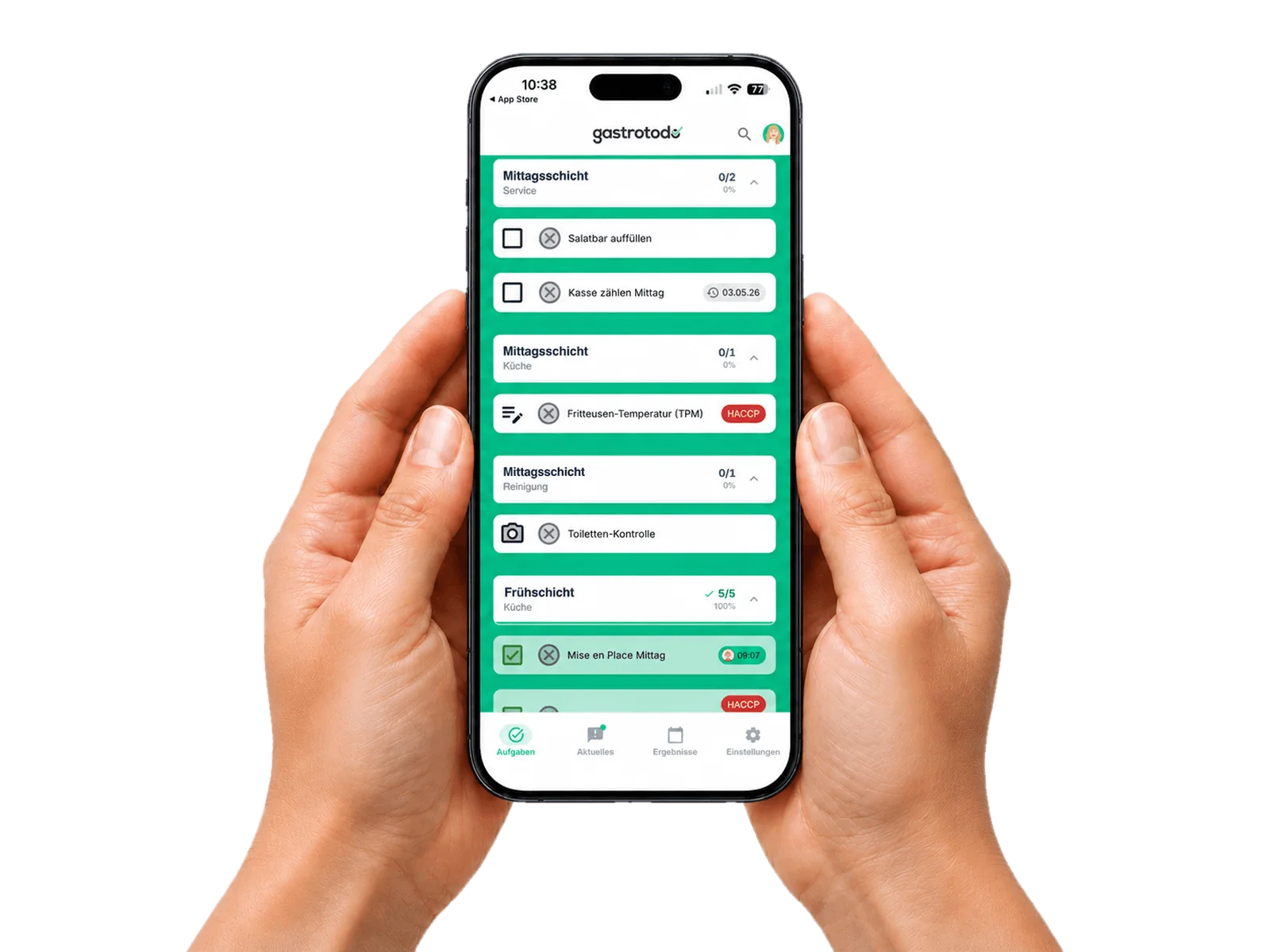
Opgavekataloget vedligeholdes præcis én gang — på organisationsniveau. Derfra rulles det ud til byernes teams, og næsten hver opgave i afdelingerne stammer fra en central skabelon i stedet for fra lokalt håndarbejde.
Det betyder: mellem to afdelinger er der ingen forskel i forløbet. En ændring af standarden sker ét enkelt sted. Ingen på stedet skal bygge opgaver op eller vedligeholde dem.
Ændrer et håndgreb sig, ændrer det sig samme aften i hver afdeling.
Flersproget er normalen her
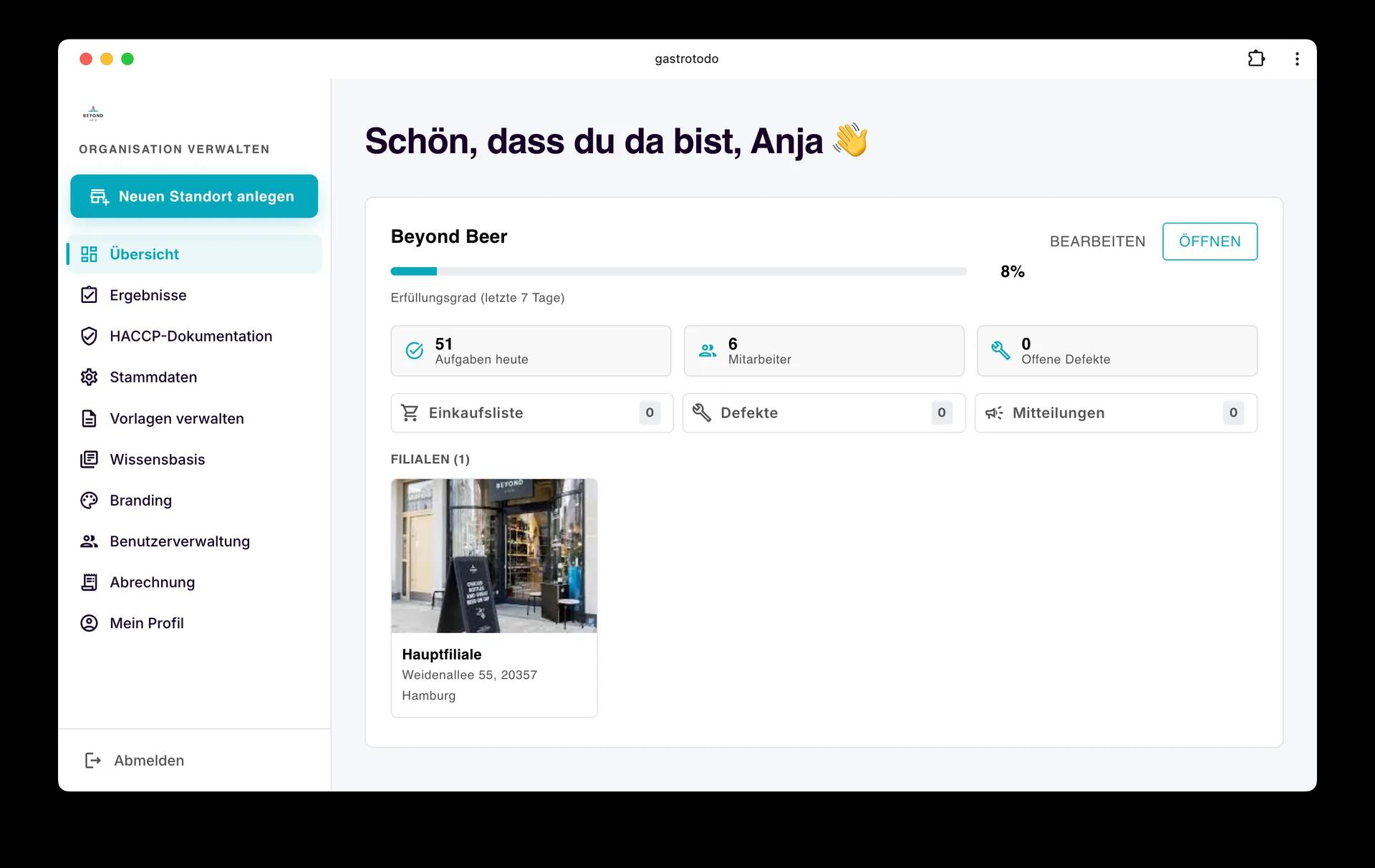
Opgaver kan køre helt på fransk, engelsk eller tysk — i denne branche er det ikke et særtilfælde, men hverdag.
Sproget følger holdet, ikke stedet. Den, der hellere læser på sit eget sprog, får opgaverne sådan, mens opgørelsen til ledelsen bliver på husets sprog.
Drikkevarekvalitet dokumenteres som hygiejne
Ved siden af rengøringsopgaverne kører kontrolpunkter på selve produktet: kontrollere malegrad og dosering, trække et prøveshot, godkende drikkevarekvaliteten, bekræfte forberedelsen af kaffe og sirupper. Dertil opgaven med at lade vægtene op om aftenen — så der overhovedet kan vejes næste morgen.
Dokumentationen er her altså ikke kun myndighedsbestemt. En café dokumenterer, om espressoen er i orden, fordi det er præcis grunden til, at gæsten kommer igen.
„Med så mange arbejdsområder mistede vi ofte overblikket. gastrotodo samler alt pænt i én app og hjælper os virkelig med at gøre dagen enklere.“

Veljko Tatalovic, Ejer · Playground Coffee
Hvad caféejere vil vide først
Vi rister selv. Passer det ind i samme system?
Ja. Café, risteri og forsendelse kan køre som adskilte områder — med en egen vagt til ristedagen og en til afviklingen af onlinehandlen. Produktionsopgaver står dermed ligeværdigt ved siden af butiksdriften.
Passer en HACCP-skabelon fra restaurationsbranchen?
Kun halvt. Her måles og rengøres ved mælkemaskine, montre, take away-station og mælkekøleskabet ved disken, ikke ved kombiovn og kølerum. Cirka fire ud af fem hygiejneopgaver er rengøring, ikke temperatur. HACCP-dokumentationen dækker begge dele, men målepunkterne opretter I selv.
Vi bogfører svind og varemodtagelse i kassen. Dobbeltarbejde?
Nej — opgaven er netop det, der sætter takten. „Registrér dagens svind i kassesystemet" står som opgave på lukkelisten, så bogføringen sker pålideligt. gastrotodo erstatter ikke fagsystemet, det minder om skridtet i det.
Kan det betale sig allerede ved ét sted?
De stærkeste brugere i denne branche er enkeltstående caféer, ikke kæder. Ved ét sted handler det mindre om kontrol end om overlevering: den, der lukker om aftenen, er sjældent den, der åbner om morgenen.
Klar til at strukturere din virksomhed?
Kom i gang med gastrotodo — prøv gratis i 7 dage og fortsæt derefter med den plan, der passer til din forretning.